


Olalla Consulting
Process engineering
Formulation Insights
Low-Cost Stability Levers: pH, Salinity Strategy for O/W Emulsions

By Carmen M. Lerga BSc (Hon) MRSC, MSCS, MIFSCC, for Olalla Consulting
When emulsions fail, the instinctive response is often to increase energy input or change equipment. Yet many of the most powerful stability levers cost nothing. They sit quietly in formulation decisions that shape interfacial behaviour long before processing begins. pH, ionic strength and phase addition strategy are among the most influential of these levers, and they are frequently underestimated.
The surfactant science behind these effects is well established. Oil in water emulsions are kinetically stabilised systems, held together by interfacial films whose strength depends on electrostatic and steric repulsive forces. Small changes in formulation conditions can strengthen or collapse these barriers dramatically. Understanding how and why this happens allows formulators to correct instability without escalating processing severity.
pH as an interfacial control parameter
pH influences emulsions primarily through its effect on surfactant head group chemistry. Ionic surfactants derive stability from charged head groups that generate electrostatic repulsion between droplets. The degree of ionisation of these head groups is pH dependent.
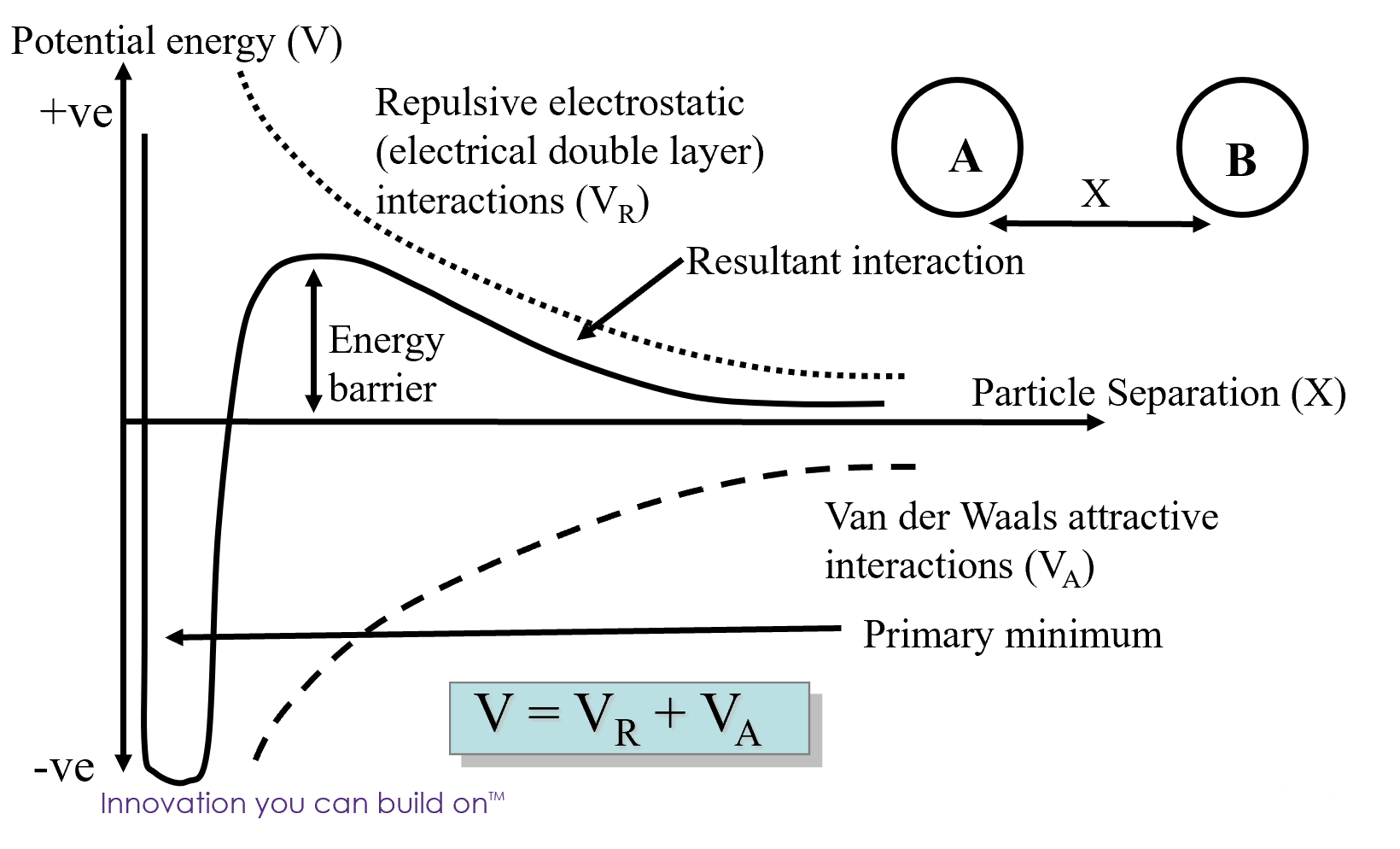
At pH values where ionisation is reduced, electrostatic repulsion weakens. Droplets can approach more closely, and attractive van der Waals forces begin to dominate. This leads to flocculation or coalescence, often rapidly. For weak acid or weak base surfactants, even modest pH shifts can move the system across this boundary.
Amphoteric surfactants add another layer of complexity. Their net charge changes with pH, and near the isoelectric point electrostatic repulsion is minimal. While amphoteric surfactants are valued for mildness and compatibility, their stabilising contribution can vary sharply with pH.
Non-ionic surfactants are often perceived as pH insensitive. While their head groups do not ionise, pH can still influence stability indirectly through interactions with other formulation components, changes in solubility, and effects on preservatives or polymers that compete at the interface.
The key point is that pH is not just a regulatory or skin compatibility parameter. It is an interfacial design variable.
Salinity and ionic strength: double layer collapse
Ionic strength has a profound effect on emulsions stabilised by charged surfactants. When an ionic surfactant adsorbs at the oil water interface, it creates a charged surface surrounded by counterions. This electrical double layer generates repulsion between droplets.
As ionic strength increases, the double layer becomes compressed. Repulsion weakens. Droplets can approach more closely, increasing the probability of coalescence. This is a classic and well documented phenomenon in colloid science.
Sources of ionic strength in formulations are often overlooked. They include:
- Added salts
- pH adjusters supplied as salts
- Actives and preservatives with ionic character
- Hard water ions such as calcium and magnesium
Even when total salt levels appear low, local ionic strength at the interface can be sufficient to destabilise the system.
This explains why emulsions that appear stable during early development can fail after the addition of actives or during scale up when water quality changes. The interface has not changed chemically, but the repulsive barrier has been weakened.
Cloud point and steric stabilisation collapse
Non-ionic surfactants stabilise emulsions through steric and hydration forces. The ethoxylated head groups bind structured water, creating a hydrated layer that resists compression. This mechanism is effective and robust, but it is temperature sensitive.
As temperature increases, hydration weakens. At the cloud point, the non-ionic surfactant becomes less soluble in water and phase separation occurs. Well before this visible point, steric repulsion diminishes. Interfacial films lose elasticity and resistance to deformation.
This behaviour has two important implications.
First, emulsions processed or stored near the cloud point are inherently fragile. Second, cloud point is influenced by formulation composition. Ionic strength lowers cloud point. Certain solvents or glycols raise it. Oil polarity and surfactant structure also play a role.
Cloud point is therefore not a fixed material property. It is a formulation outcome that can be tuned.
Phase inversion risk and formulation pathways
Phase inversion is often associated with catastrophic emulsion failure, but it is also a predictable outcome of interfacial balance. Bancroft’s rule states that the continuous phase is the one in which the emulsifier is more soluble. When formulation conditions shift that solubility balance, inversion can occur.
pH changes, temperature changes and electrolyte addition can all move a system closer to inversion. Non-ionic systems are particularly sensitive near the phase inversion temperature, where hydration forces weaken and surfactant affinity shifts.
Uncontrolled inversion during processing leads to coarse emulsions, broad droplet size distributions and poor stability. Controlled inversion, by contrast, is used deliberately in some processes. The difference lies in understanding and managing the underlying interfacial chemistry.
Phase addition strategy and interfacial coverage
One of the most underestimated stability levers is the order and rate at which phases and ingredients are combined.
Droplets formed before sufficient surfactant is available are poorly protected. Once coalescence occurs at this early stage, it cannot be reversed later. This is why phase addition strategy matters more than final composition.
Key principles include:
- Ensuring surfactant is fully dissolved and available before droplet formation
- Adding the dispersed phase at a rate that allows continuous interfacial coverage
- Avoiding late addition of highly surface-active ingredients without compensating adjustments
Actives, fragrances and preservatives introduced after emulsification often compete for the interface. If they displace stabilising surfactant molecules, the interfacial film weakens and delayed instability appears.
From a formulation perspective, this is not a processing issue. It is a sequencing issue.
Emulsifier layer disruption by actives and preservatives
Many functional ingredients are surface active by nature. Essential oils, aromatic compounds, alcohols and certain preservatives adsorb readily at interfaces. When introduced into an emulsion, they may displace emulsifiers or alter packing density.
This disruption can reduce interfacial elasticity and increase permeability of the film. The result is often slow coalescence, flocculation or accelerated creaming that appears days or weeks after manufacture.
This mechanism explains why accelerated stability tests sometimes fail to predict real time behaviour. Interfacial displacement is a kinetic process that unfolds gradually.
Low-cost mitigation strategies include adjusting emulsifier ratios, modifying addition order, or fine-tuning pH and ionic strength to restore interfacial resilience.
Why these levers matter more than shear
Processing amplifies what formulation allows. If pH, ionic strength and phase behaviour are well controlled, droplets formed under moderate shear remain stable. If these parameters are poorly aligned, no amount of shear can compensate.
This perspective ties directly back to the earlier blogs. Interfacial design comes first. Processing geometry comes second. Low-cost formulation levers shape whether processing will succeed or fail.
Practical implications for development and scale up
From a development standpoint, these levers should be explored early, before equipment changes are considered. Simple screening experiments adjusting pH, salt level or addition order often reveal the root cause of instability faster than mechanical trials.
From a scale up perspective, controlling water quality, temperature profiles and ingredient sequencing becomes critical. Many scale up failures are not caused by insufficient shear, but by uncontrolled changes in ionic strength or phase behaviour.
Conclusion
pH, salinity and phase addition strategy are among the most powerful and least expensive tools available to formulators working with oil in water emulsions. These parameters directly control interfacial forces, surfactant solubility and film integrity. Small adjustments can shift a system from marginally stable to robust, without changing equipment or increasing energy input.
Understanding these low-cost levers allows formulators to design stability intentionally, rather than reacting to failure after processing.
I will show how pH, ionic strength and formulation sequencing shift emulsion stability curves, and how to apply these levers systematically, during my technical session at CHEMUK on 20 May, Stage 4 at 15:45.
🔗 Learn more at Olalla Consulting
For formulation troubleshooting, stability optimisation and scale up strategy, visit:
https://www.olallaconsulting.com