
Olalla Consulting
Transparency in Cosmetic Claims
Decoding Cosmetic Buzzwords: Natural, Clean & More
By Carmen M. Lerga BSc (Hon) MRSC, MSCS, MIFSCC, for Olalla Consulting
|
Introduction: Why Words Matter in Beauty
Language is one of the most powerful tools in cosmetics marketing. A single word, natural, clean, cruelty‑free, can evoke trust, aspiration, and ethical values. But when those words are vague or unsubstantiated, they become liabilities.
Today’s consumers are not passive buyers. They are informed, discerning, and quick to challenge misleading claims. In fact, 54% of UK consumers say they would boycott a brand if they felt misled, and 80% globally distrust cosmetic claims.
For brands, this means every word must be chosen with precision and backed by evidence. In this blog, we’ll decode the most problematic cosmetic terms, explain why they’re risky, and show how to use them responsibly.
The Term “Natural”
Why it misleads: The term “natural” is one of the most frequently used, and most frequently misunderstood, claims in the cosmetics industry. Its popularity stems from consumer desire for simple, safe, and “better-for-you” products. However, there is no harmonized legal definition of “natural” in either the EU or UK, which means that brands often interpret and apply the term inconsistently. Without proper substantiation and clarity, using “natural” can easily cross the line into greenwashing, leaving consumers misled and brands open to regulatory and reputational risks.
Regulatory context: To provide some structure, ISO 16128 was introduced as a voluntary international standard. According to ISO 16128:
- A product can only be labelled as “natural” if a minimum of 95% of its ingredients, by weight, are of natural origin.
- Ingredients described as “of natural origin” must contain more than 50% naturally derived content.
Common pitfalls include:
- Combining synthetic and natural ingredients in a product without clear disclosure, which can mislead consumers about the overall composition.
- Relying on vague terminology such as “made with natural extracts” without specifying the proportion or percentage of natural content.
- Marketing a product as “natural” when, in reality, only a single ingredient meets the relevant criteria, while the rest are synthetic or highly processed.
Best practice:
To ensure transparency and build trust, brands should avoid blanket descriptors like “natural.” Instead, provide precise information, such as:
- “97% of ingredients, as defined by ISO 16128, are natural or of natural origin.”
- Offer a full INCI (International Nomenclature of Cosmetic Ingredients) breakdown and make supporting documentation readily available.
This level of detail not only meets growing consumer demand for honesty but also helps safeguard brands from accusations of greenwashing.
The Term “Clean”
Why it misleads: The term “clean beauty” is widely adopted in marketing, but it lacks a formal legal definition and remains open to interpretation. As a result, brands often use “clean” to suggest that their products are inherently safer or healthier simply because they exclude certain ingredients, despite the fact that many excluded ingredients are both legal and safe when properly used. Frequently, “clean” messaging plays on consumer fears, implying that ingredients omitted from a formula are dangerous or toxic, even when scientific consensus says otherwise. This fear-based marketing can misinform and needlessly alarm consumers, leading them to distrust other safe and compliant products.
Regulatory context: EU regulators have cautioned brands against making vague or subjective claims like “clean” unless such terms are explicitly defined and substantiated. Brands are expected to clearly state the criteria behind their “clean” claim, such as listing which ingredients are avoided and why, and to share these standards with consumers in a transparent manner. Failure to do so can be considered misleading and may attract regulatory attention or corrective action.
Common pitfalls:
- Resorting to fear-based marketing tactics (e.g., “free from chemicals”), which misconstrue scientific facts, given that all cosmetic products are composed of chemicals, whether natural or synthetic.
- Being ambiguous or inconsistent in use of the term “clean,” since each brand may set different standards for what it means, leading to consumer confusion and a lack of industry-wide clarity.
- Failing to provide documentation or accessible details about the ingredient policy underpinning the claim.
Best practice:
- Provide a clear, detailed definition of what “clean” means for your brand, such as: “Formulated without parabens, silicones, or synthetic fragrances, based on our publicly available ingredient policy.”
- Publish an ingredient policy that specifies which ingredients are excluded, the reasoning behind these choices, and references to relevant scientific or regulatory sources.
- Avoid absolute or misleading claims like “toxic-free” or “chemical-free.” Instead, use precise, evidence-based language and, where possible, share third-party certifications or independent assessments that support your “clean” criteria.
By taking these steps, brands can help ensure their use of “clean” is meaningful, transparent, and builds lasting consumer trust, rather than relying on ambiguous or fear-driven messaging that may ultimately undermine credibility.
The Term “Dermatologist‑Recommended”
Why it misleads: Medical endorsements carry significant weight for consumers, but the term “dermatologist‑recommended” is frequently misused or overstated. In many cases, brands give the impression of widespread professional approval when, in reality, the recommendations may be based on very limited feedback or insufficient testing. Without context, this phrase can easily lead consumers to overestimate a product’s credibility or effectiveness.
Regulatory context: There is currently no harmonized or formal regulatory definition for “dermatologist‑recommended.” To legally use this term in advertising, brands must ensure their claims are substantiated: testing should be carried out by qualified dermatologists under controlled conditions, and results must be documented in signed statements. Simply receiving positive comments from one or two dermatologists or relying on anecdotal evidence does not meet this threshold.
Common pitfalls:
- Relying on minimal or unrepresentative input, such as a single dermatologist’s opinion, and extrapolating it to represent broader professional consensus.
- Making generalized claims, like “recommended by dermatologists”, without publishing the number of professionals involved or providing any supporting methodology or results.
- Using the label as a generic marketing tool with no robust evidence, ultimately misleading consumers about the product’s tested benefits.
Best practice:
- Use specific, transparent wording, such as “Tested by three board‑certified dermatologists on 50 subjects with varying skin types”, to clarify the scope of input and testing.
- Ensure that details of the methodology, including test parameters and participant demographics, are readily available to consumers for independent scrutiny.
- Publish or make accessible supporting documentation, such as signed dermatologist statements or summaries of the test results, to maintain credibility and reinforce consumer trust.
The Term “Vegan”
Why it misleads: The word “vegan” evokes an expectation that the product contains no animal-derived ingredients and that neither the product nor its raw materials involved animal testing. However, the reality of complex supply chains can make these promises difficult to guarantee without comprehensive oversight. Brands may inadvertently use animal-derived substances in processing backgrounds or may not account for third-party animal testing further up the supply chain, leading to unintentional misleading claims.
Regulatory context: There is no single, legally binding definition of “vegan” in cosmetics law. Instead, brands often cite private or independent standards, such as those set by The Vegan Society or other third-party organizations, with each having distinct requirements and certification processes. This lack of universal regulation places responsibility on the brand to ensure the accuracy of their claim.
Common pitfalls:
- Self-certifying products as “vegan” without requiring or obtaining detailed declarations from ingredient suppliers about the full traceability and compliance of each component.
- Overlooking the possibility of animal testing or animal-derived contamination in the upstream supply chain, which can compromise the integrity of the claim.
- Using generic “vegan” labels without any supporting evidence or third-party validation.
Best practice:
- Request and retain up-to-date, written certifications from every ingredient supplier confirming the absence of animal-derived ingredients and animal testing.
- Where possible, obtain third-party vegan certifications, such as the logo from The Vegan Society, that independently verify the product’s compliance.
- Clearly communicate the boundaries of your claim, such as: “Certified by The Vegan Society: No animal ingredients or testing at any stage of product development or ingredient sourcing.”
The Term “Cruelty‑Free”
Why it misleads: The term “cruelty‑free” is frequently used to suggest ethical superiority, but in the EU and UK, animal testing for cosmetic products and their ingredients is already prohibited by law. As a result, advertising products as “cruelty‑free” creates the false impression that this is an added benefit rather than a legal requirement, misleading consumers into thinking competitor brands are less ethical by comparison.
Regulatory context: The Advertising Standards Authority (ASA) in the UK specifically cautions brands against presenting ordinary legal compliance as something that makes their products unique. Such practices can be classified as misrepresentation and may attract regulatory action.
Common pitfalls:
- Affixing the “cruelty‑free” label without maintaining or requesting substantiating documentation that covers the entire supply chain, including ingredient suppliers and manufacturers.
- Messaging that encourages the misunderstanding that animal testing is a widespread issue among competitors, thereby creating a false sense of ethical differentiation.
- Using the term for compliance that is universal, rather than highlighting any additional voluntary standards.
Best practice:
- Only use established and recognized certification logos (such as Leaping Bunny) along with an explanation of what the certification entails and which parts of the supply chain it covers.
- Explicitly state that your “cruelty‑free” status incorporates every stage, from ingredient sourcing to the final product, not just the absence of animal testing on finished goods.
- Make supporting documentation or links to certifying organization criteria easily available for consumers seeking further reassurance.
The Term “Recyclable / Recycled”
Why it misleads: Packaging claims such as “recyclable” or “recycled” are commonly misunderstood. For example, while a bottle might be made of recyclable material, local waste management facilities may not process it, meaning that, in practice, it still ends up in a landfill. Such claims, without further detail, can easily mislead consumers about the genuine environmental impact of the product.
Regulatory context: EU law stipulates that environmental claims, including those about recyclability or recycled content, must be truthful and not mislead average consumers about a product’s actual performance or benefits.
Common pitfalls:
- Claiming “100% recyclable” when certain components (like pumps, caps, or labels) are not accepted by most curbside recycling programs.
- Creating confusion by omitting information about which parts of the packaging are recyclable or under what specific conditions.
- Overstating the percentage of recycled content in the absence of laboratory verification or independent audit reports.
Best practice:
- Commission laboratory tests and third-party verifications to confirm the recyclability or recycled content of all packaging elements, and make these reports available to consumers.
- Be specific about which parts of the product are recyclable and where: for example, “Bottle and cap are both 100% recyclable in existing curbside collection systems.”
- Offer practical disposal instructions, such as encouraging consumers to rinse packaging before recycling, so they can take appropriate action based on local guidelines.
The Term “Sustainably Sourced”
Why it misleads: Describing ingredients or materials as “sustainably sourced” is an attractive proposition, but the phrase is inherently vague. Without clearly defined parameters or independent verification, “sustainably sourced” can come across as aspirational or even as greenwashing, especially if brands overlook significant trade-offs such as the environmental impact of transportation or packaging.
Regulatory context: Any claim of sustainability must be substantiated with robust evidence. This often includes third-party certifications, like those from the Roundtable on Sustainable Palm Oil (RSPO), Forest Stewardship Council (FSC), or Fairtrade, and verifiable supply chain audits.
Common pitfalls:
- Using the term “sustainable” without attaching any certifying evidence or making audit results publicly accessible.
- Failing to acknowledge or account for less visible environmental trade-offs, such as emissions generated during global transport.
- Making broad claims without defining what “sustainable” actually means for the product or company.
Best practice:
- Always provide clear references to relevant certifications and the auditing bodies involved, including frequency of audit and scope.
- Where feasible, offer quantified environmental impact data, such as reductions in carbon footprint, water usage, or use of renewable resources.
- Use precise language and illustrative examples, like: “We use RSPO‑certified sustainable palm oil, verified and audited annually to ensure compliance with environmental and social standards.”
The Term “Refillable”
Why it misleads: Refillable packaging is rising in popularity as a sustainability solution, but these claims can be misleading if their full lifecycle impact is not considered. If consumers do not purchase and use refills regularly, the environmental benefit of refillable models, versus single-use alternatives, may be negligible or even negative.
Regulatory context: Brands must ensure they do not exaggerate the environmental benefits of refillable packaging. Claims should be grounded in real data comparing the impact of refillable and single-use options, accounting for factors such as the proportion of refills used and logistics involved in collection or return.
Common pitfalls:
- Marketing refillable formats without a convenient or effective collection, return, or refill system in place.
- Ignoring the possibility that, if most consumers do not actually buy and use refills, the net packaging waste could increase.
- Claims that emphasize the potential rather than the proven outcome in terms of waste reduction.
Best practice:
- Back refillable claims with third-party studies or life cycle assessments showing lower total environmental impact compared to single-use packaging.
- Transparently explain how the system works and what consumers need to do, such as: “Refills can be ordered online and returned via our mail-back program, resulting in an 80% reduction in packaging weight per use.”
- Monitor and, where possible, publish statistics on return/refill rates to demonstrate the program’s effectiveness in practice and reinforce your commitment to sustainability.
Consumer Pain Points
Consumers are increasingly frustrated by several recurring issues in cosmetics marketing and packaging:
Confusing terminology: the term “clean” is used by different brands in inconsistent ways, making it hard for consumers to understand what it actually means. For one brand, “clean” might mean avoiding certain ingredients; for another, it could simply mean using recyclable packaging or including naturally derived elements. This inconsistency leads to confusion and erodes trust, as shoppers struggle to discern genuine claims from clever marketing.
Irrelevant certifications: Product packaging often displays an array of certification logos that, upon closer inspection, may not even be relevant to the product category in question. For example, a skincare product might display a certification related to food safety or textiles, which does not guarantee anything about skincare efficacy or ingredient sourcing. This overload of “badging” distracts consumers and makes it difficult to know what actually applies to the product they’re buying.
Hidden trade‑offs: Some products tout features like “recyclable packaging,” but frequently, these materials require specialized recycling facilities not available to the average consumer. In practice, this means the packaging may still end up in landfill, contrary to the green image projected by the brand. These hidden requirements or limitations are rarely disclosed upfront, leading to disappointment and skepticism.
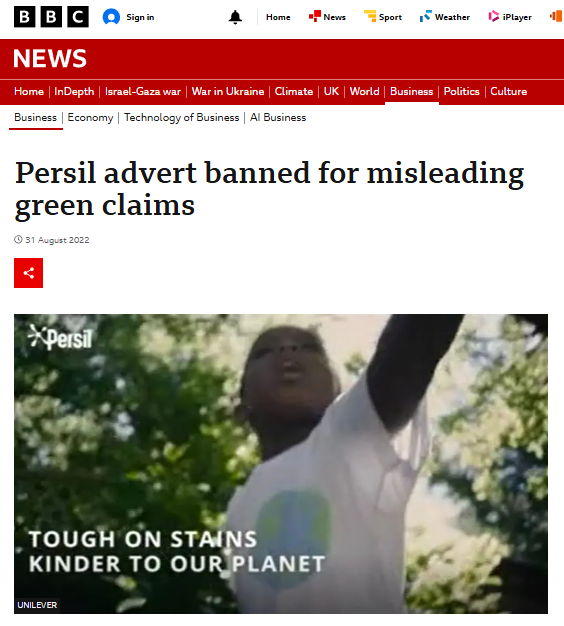
Misleading imagery: Brands often employ visual cues like green leaves, earthy colour schemes, or eco‑symbols to suggest environmental responsibility. However, these images are not always supported by any meaningful evidence or data. The use of symbolic imagery without substantiation can mislead consumers into perceiving a product as more sustainable or environmentally friendly than it actually is.
Lack of specific data: Many claims are backed by vague statements, such as “contains recycled materials” or “made with natural ingredients,” without providing precise figures, percentages, or independent verification. This lack of clear, specific data prevents consumers from making informed choices and further contributes to general mistrust.
Ultimately, true transparency means tackling these pain points head‑on, by defining terms clearly, substantiating every claim, and sharing concrete, relevant information, so that consumers are empowered to make decisions with confidence and clarity.
The Golden Rules for Avoiding Misleading Claims
Industry bodies like ASA recommend:
- Avoid absolute claims.
- Gather evidence before marketing.
- Emphasize near‑term, achievable progress.
- Be humble and transparent about challenges.
- Use clear, qualified, measurable terminology.
- Rely on third‑party audits.
- Never present legal compliance as unique.
- Take a full life‑cycle view.
Conclusion: Precision Builds Trust
Words matter. In cosmetics, they can build or break trust. Misleading terms like “natural” or “clean” may seem harmless, but they erode credibility and invite regulatory scrutiny.
The solution is precision. Define your terms, substantiate your claims, and communicate them clearly. Consumers reward honesty, 73% are willing to pay more for transparent brands.
At Olalla Consulting, we help brands decode their language, audit their claims, and build transparency into every stage of product development. Because in 2025, transparency isn’t just compliance, it’s differentiation.
📩 Contact us: contact@olallaconsulting.com
🌐 Visit: www.olallaconsulting.com