

Olalla Consulting
Process engineering
Cosmetic regulations
From Bench to Business

By Carmen M. Lerga BSc (Hon) MRSC, MSCS, MIFSCC, for Olalla Consulting
Why innovation only succeeds when market reality is designed in early
In product development, innovation is often measured by what is technically possible. New ingredients, novel delivery systems, improved performance profiles, or more sustainable chemistry are all seen as indicators of progress. Yet in practice, many technically sound products struggle to gain traction once they leave the lab.
This disconnect highlights a persistent challenge in beauty and personal care development. Innovation does not fail because it lacks ingenuity. It fails because commercial reality is introduced too late.
Successful products are not those with the most advanced formulation alone. They are the ones where technical ambition, market logic, and execution constraints are aligned early enough to shape decisions meaningfully.
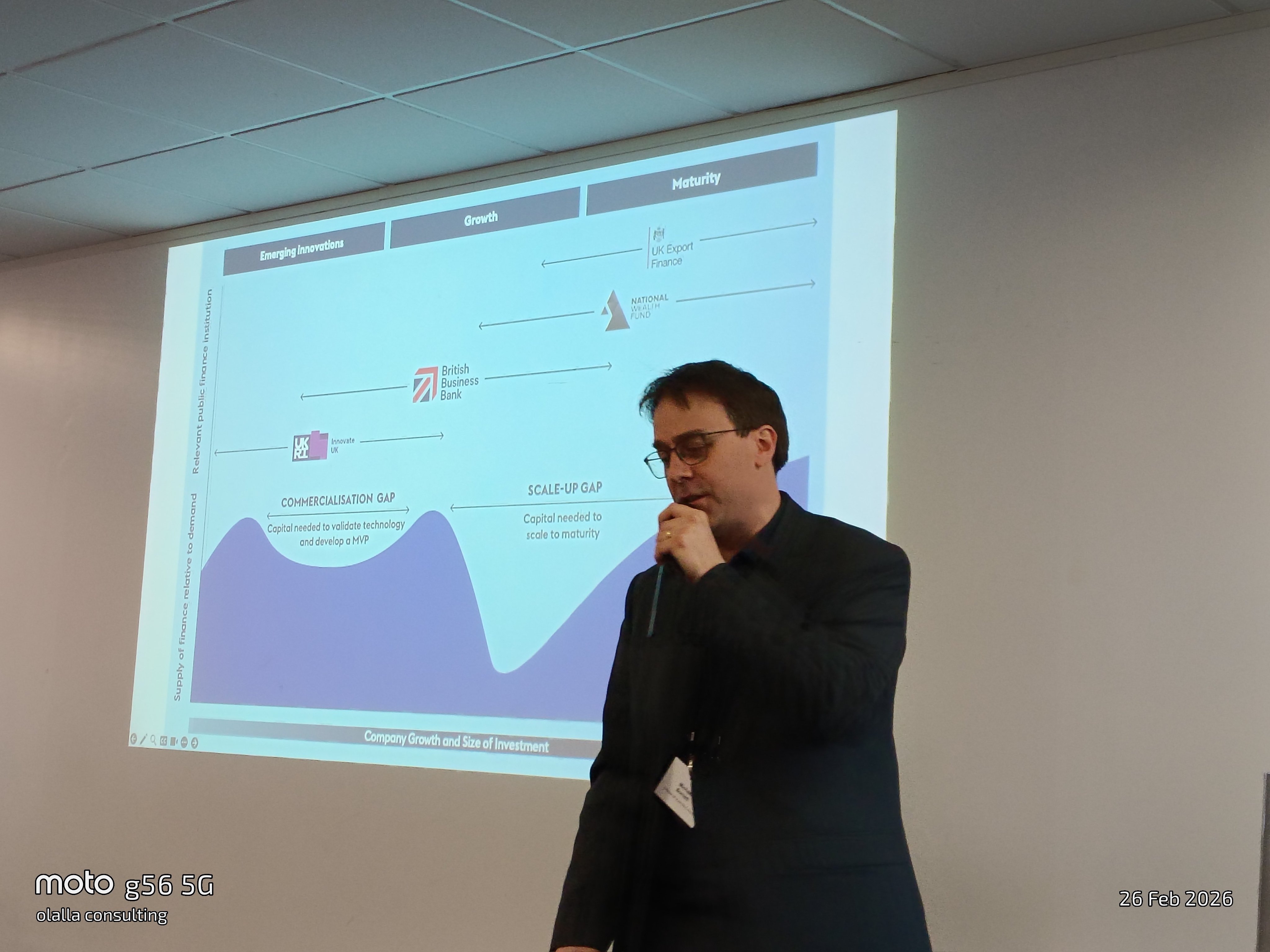
Recent industry conversations have reinforced this gap between innovation and launch readiness. At ChemUK, and again during commercialisation discussions in Manchester, a recurring theme emerged. Many technically impressive concepts struggle not because the science is weak, but because manufacturability, cost structure, claims feasibility, and market positioning were not designed in early enough. The same issues surfaced repeatedly across categories, formats, and company sizes.
When technical success is not commercial success
From a formulation perspective, it is entirely possible to develop a product that performs well in controlled conditions but struggles in the market. Performance data may be strong, stability acceptable, and claims technically defensible, yet the product still fails to resonate or scale.
Common reasons include:
- a price point that cannot absorb the formulation cost
- a positioning that is unclear or difficult to communicate
- performance attributes that matter technically but not experientially
- supply chains that are fragile or unsuitable for growth
- claims that are accurate but commercially unconvincing
These are rarely formulation problems alone. They are commercial definition problems that were not addressed early enough to influence development choices.
Commercialisation starts before scale-up
Commercialisation is often treated as a downstream activity, something that happens once a product is “ready”. In reality, many of the factors that determine commercial success are locked in long before scale-up begins.
Decisions around ingredient selection, system complexity, processing requirements, packaging compatibility, and testing strategy all carry commercial implications. If these decisions are made without a clear view of market expectations, cost boundaries, and competitive context, teams can end up optimising for the wrong outcome.
For example, a formulation that depends on a narrowly available raw material may perform beautifully, but struggle when volumes increase. A product positioned as premium may carry cost structures that are incompatible with its target retail channel. A concept built around novelty may require explanation that is too complex for effective communication.
This pattern echoed across multiple conversations at ChemUK and during recent Manchester-based commercialisation sessions, where late-stage corrections were consistently traced back to early design decisions.
None of these issues are visible if commercial thinking is delayed until late-stage development.
Designing with constraints improves outcomes
There is a misconception that commercial constraints limit innovation. In practice, they often sharpen it.
When teams understand:
- the realistic target price
- the competitive landscape
- the claims that will actually influence purchase
- the manufacturing and supply realities
- the retail and distribution context
they can design products that are both technically strong and commercially resilient.
This does not mean reducing ambition. It means directing effort toward solutions that have a credible route to market. Constraints help prioritise what truly matters and prevent development resources being spent on features that do not translate into value.
Market fit is a formulation consideration
Market fit is not just a marketing concept. It has direct formulation consequences.
Consumer expectations around texture, fragrance, speed of payoff, ease of use, and sensorial reassurance all influence whether a product feels “right”. These perceptions are shaped by formulation choices, not just by communication.
A technically effective product that feels wrong in use can struggle to achieve repeat purchase. Conversely, a product that delivers the right in-use signals, even with modest novelty, can outperform expectations.
This is where formulation, consumer relevance, and commercial performance intersect. Designing for market fit requires early clarity on what success looks like in real use, not just in technical benchmarks.
Alignment reduces friction across teams
Commercialisation challenges often surface as friction between teams. Formulation, regulatory, procurement, marketing, and manufacturing may all be working competently, but from different assumptions.
When commercial intent is not clearly defined early, misalignment becomes inevitable. Testing may not support the claims marketing wants to make. Procurement may struggle to secure materials at scale. Manufacturing may face processing constraints that were not anticipated.
Early alignment around market intent creates a shared framework for decision-making. It helps teams understand acceptable trade-offs and prevents late-stage rework that adds cost and delays.
Innovation that lasts is engineered, not hoped for
The most successful products are rarely those that simply reach the market fastest. They are the ones that move through development with fewer corrective loops because early decisions were grounded in both technical and commercial reality.
Innovation that lasts is not accidental. It is engineered through:
- clear definition of the commercial goal
- disciplined early planning
- formulation choices informed by market logic
- testing strategies aligned with claims intent
- and realistic pathways to scale and supply
When these elements are integrated early, products become easier to validate, easier to communicate, and easier to defend once they reach the market.
Conclusion
Moving from bench to business is not a single step. It is a mindset that needs to be embedded from the beginning of development.
Commercial success is not something that can be added after formulation is complete. It must be designed into the product through early decisions that connect technical performance with market relevance.
When innovation is shaped with commercial reality in mind, products are not only more likely to launch successfully, but they are also more likely to endure. That is where formulation stops being an isolated technical exercise and becomes a true driver of business value.
If you are developing products in beauty, personal care, or beyond, the question is not: Can we make it? It is: Should we make it this way?
Talk to Us here and rethink how you build products that last.